What to Serve Guests Who Don't Drink Alcohol
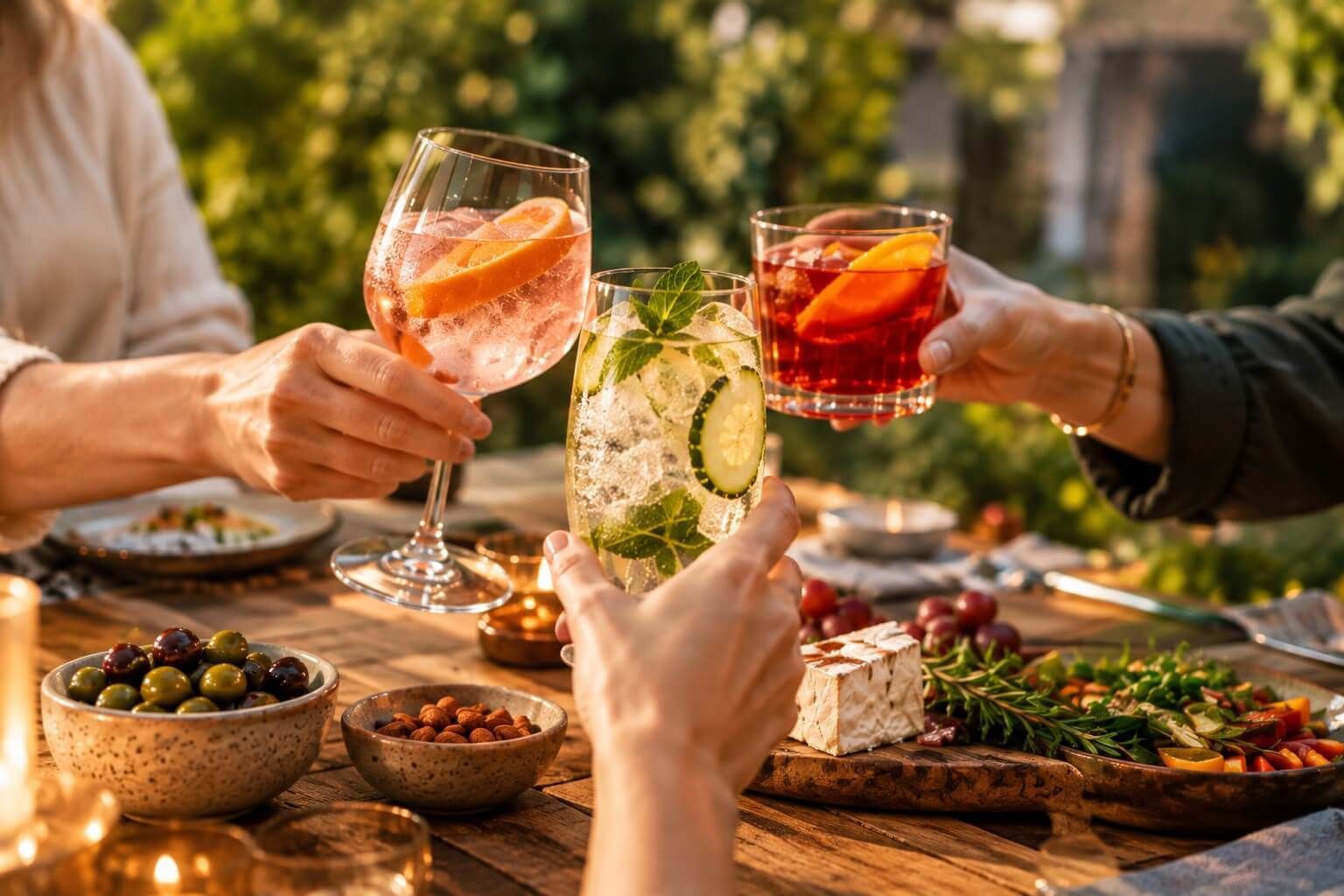
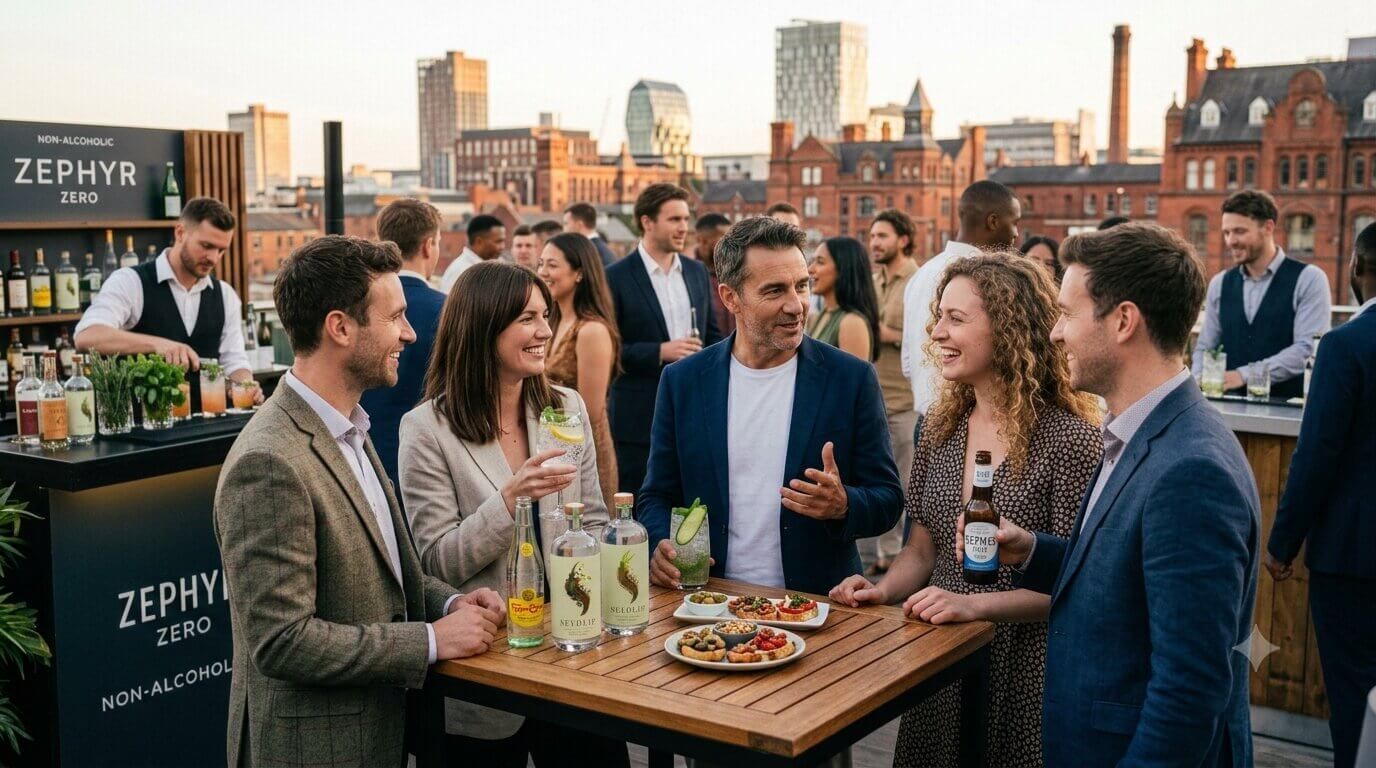
Serve non-drinkers the same thing you serve everyone else: a proper drink, made deliberately, in the same glassware. An alcohol-free aperitif with tonic, a botanical spirit with lemonade, or a ready-mixed alcohol-free cocktail all work. What matters is less the recipe than the treatment. A drink that was made, not poured, removes the awkwardness entirely.
Most hosts get this wrong in the same way, and it is rarely through lack of effort. They plan the wine carefully, think about the food at length, and then handle the non-drinkers with whatever happens to be in the fridge.
The result is predictable. One guest spends the evening holding a glass of orange juice while everyone else gets something that was clearly thought out. The gap is obvious to the person on the receiving end, and it is entirely avoidable.
This guide covers what to actually pour, how much to buy, what to avoid, and the small details that make the difference between accommodating someone and actually hosting them.
Why does this matter more than it sounds?
Because the drink is how hospitality gets expressed at the door.
When someone arrives and is handed a carefully chosen drink, the message is that they were expected. When they are asked what soft drinks they would like and offered a choice between cola and water, the message is that they were an afterthought. Neither message is intended, but both are received.
There is also a practical dimension. People who are not drinking for reasons they would rather not discuss, whether that is pregnancy, medication, recovery, religion or simply driving, benefit enormously from holding a glass that does not invite questions. A spritz in a wine glass looks like a spritz in a wine glass.
What should I actually pour?
Pick one good alcohol-free spirit and build a proper serve from it. That is genuinely the whole strategy.
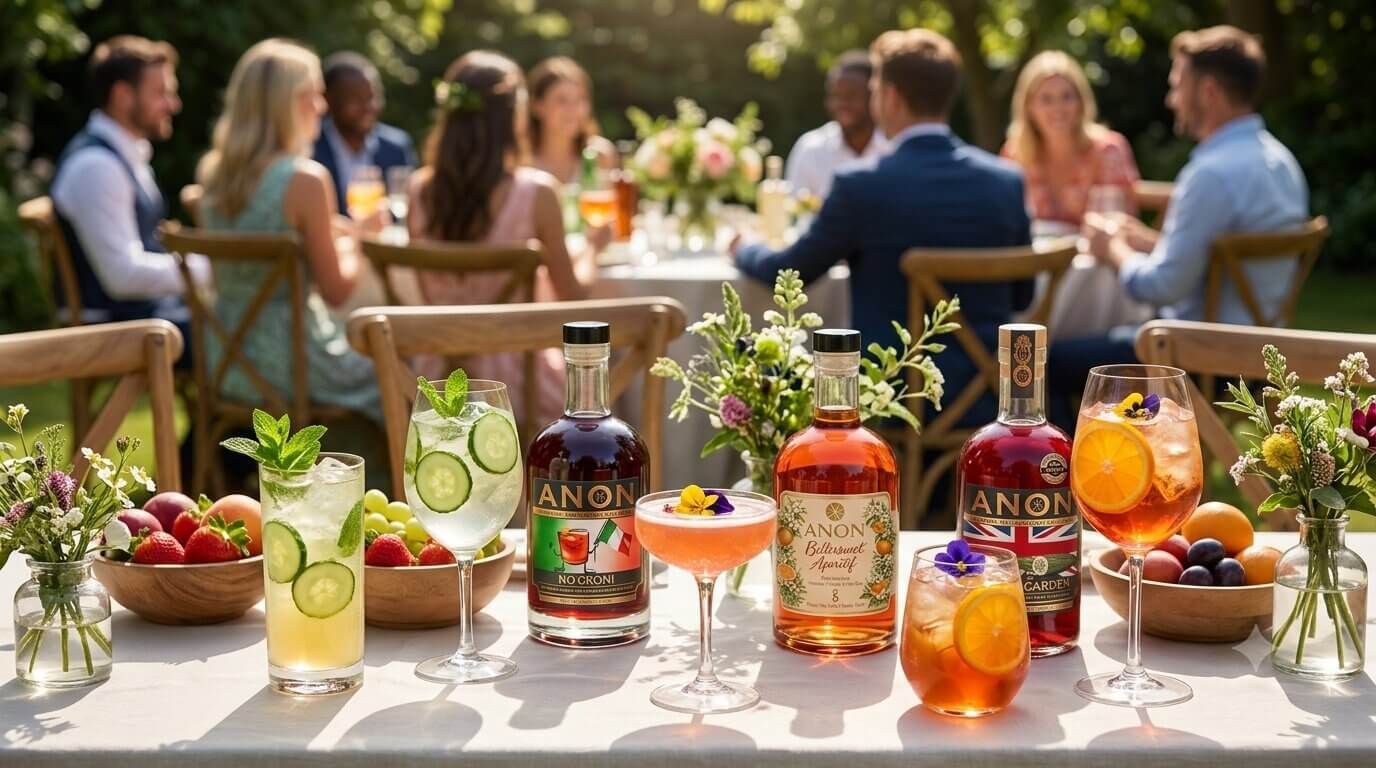
The most versatile option for hosting is a bittersweet aperitif. ANON Bittersweet Aperitif over ice with tonic and a slice of orange takes fifteen seconds to build, looks like a standard aperitivo serve, and has enough bitterness to work before food rather than cloying after two glasses.
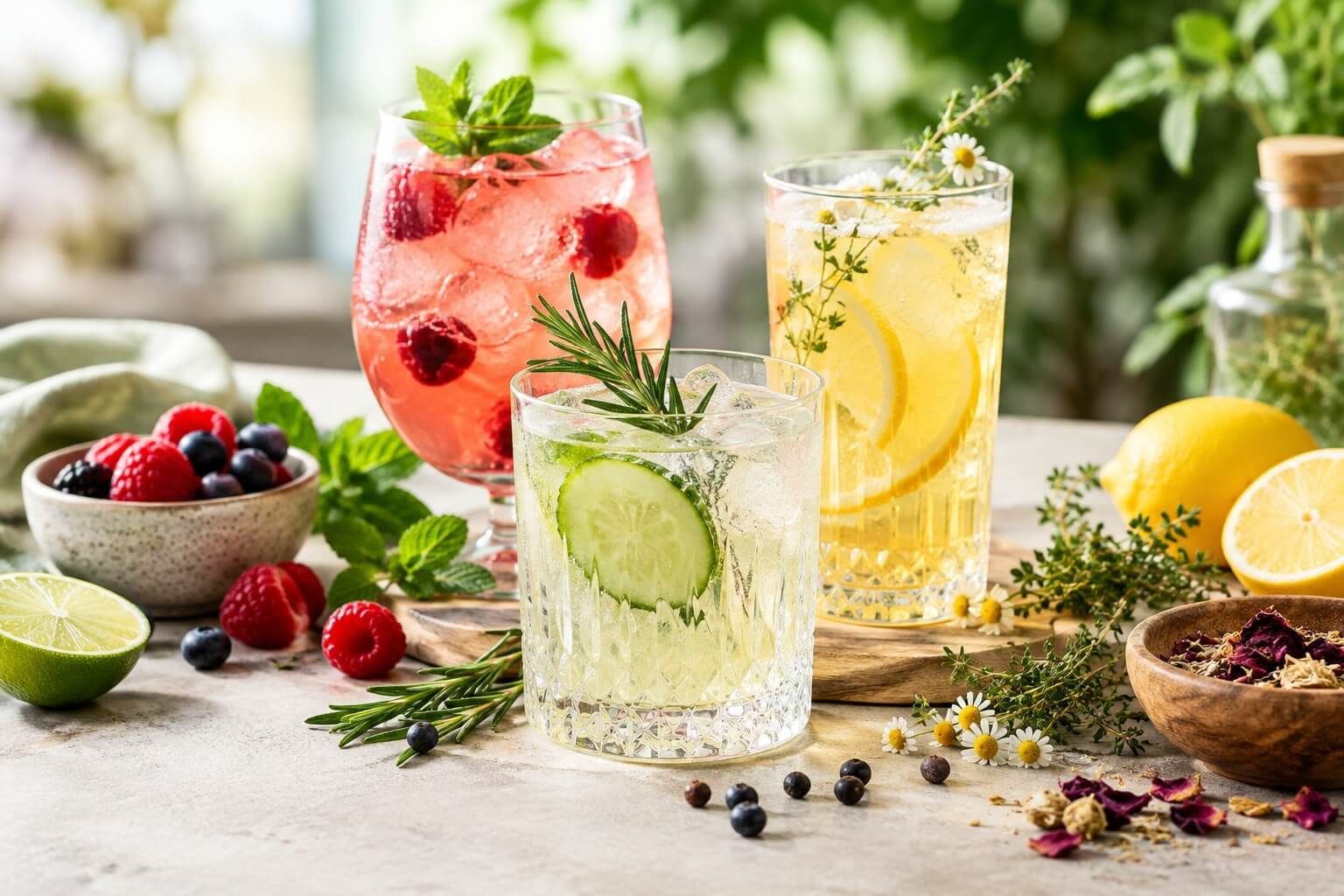
For something lighter, particularly in warmer months or at lunch, ANON English Garden with lemonade, fresh mint and cucumber fills the long summer drink slot. For anyone who normally drinks dark spirits, ANON Spiced Cane with ginger ale and lime is the closest equivalent.
If you would rather not mix anything at all, a ready-made option like ANON No Groni needs only a glass, ice, and a slice of orange.
What if I don't know who is drinking and who isn't?
Offer the alcohol-free option to everyone rather than asking who needs it.
The simplest version of this is to make the arrival drink alcohol-free by default, with wine or beer available for anyone who asks. It removes the moment where someone has to announce they are not drinking, and in practice a good number of guests take the alcohol-free option simply because it was offered first.
If you are putting out a drinks table, place the alcohol-free bottles in the same section as everything else, not in a separate cluster. The layout communicates more than the labels do.
What should I avoid serving?
Three things tend to fall flat.
The first is anything purely sweet. Fruit juice, lemonade on its own, and most pre-made mocktails are pleasant for one glass but tiring over an evening. Without bitterness or acidity, nothing resets the palate.
The second is a single unopened bottle at the back of the fridge. If the non-drinker has to ask for it, it does not count.
The third is anything served in a different kind of glass than everyone else. This sounds trivial. It is the single most commented-on detail when people describe being hosted well or badly as a non-drinker.
How much should I buy?
A 70cl bottle yields roughly fourteen 50ml serves, which is a useful planning figure.
For a dinner party of eight where two people are not drinking, one bottle plus mixers is comfortable and leaves some over. For a larger gathering of around twenty, assume a third of guests will take an alcohol-free option at least once and buy two bottles.
Buy mixers generously. The usual failure point isn't running out of the spirit; it is running out of tonic at nine o'clock. Having the right mixers on hand is as important as the bottle itself.
What about guests who are pregnant, driving or taking medication?
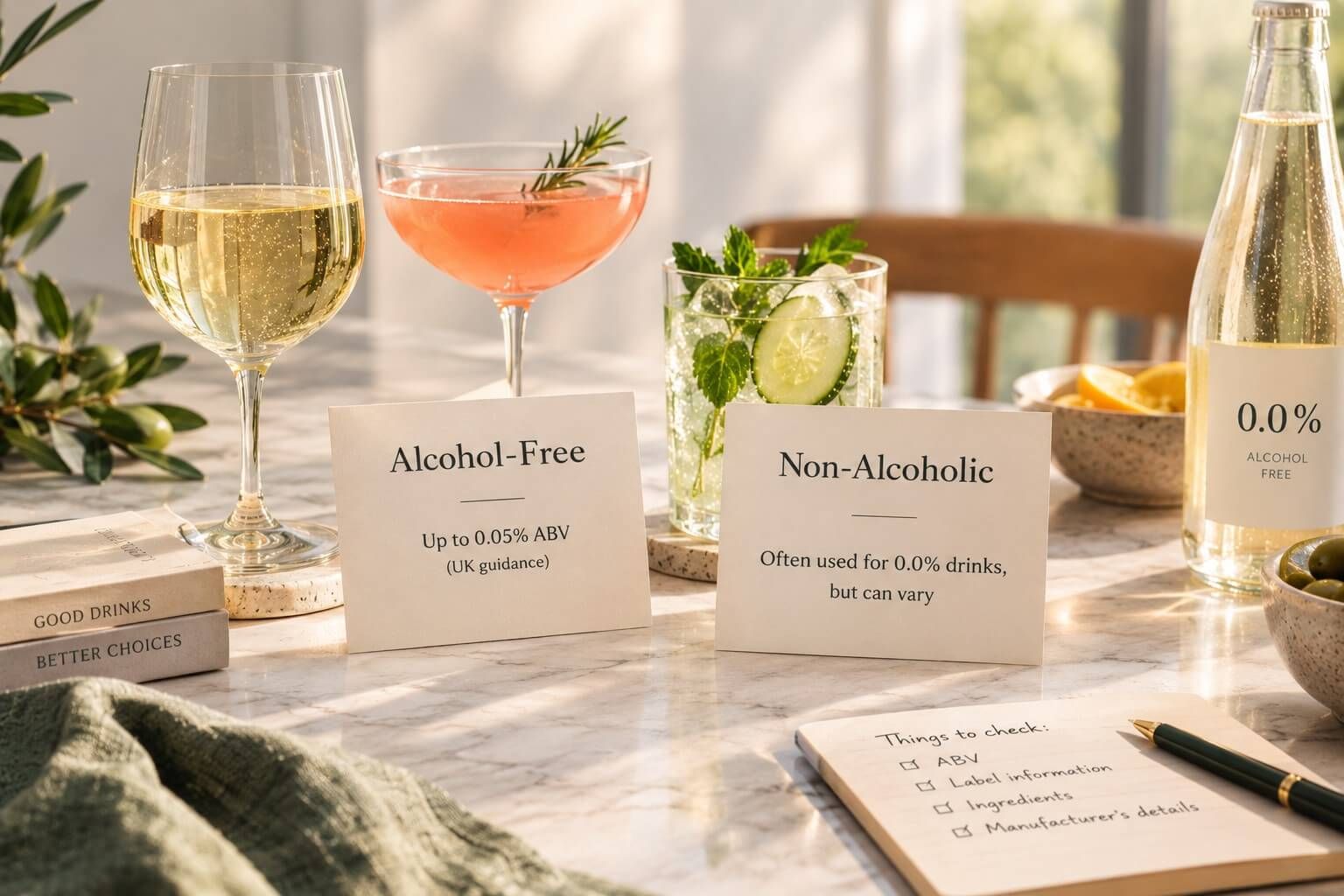
Check the labelling, not the marketing, because the terms aren't interchangeable.
Drinkaware sets out the UK categories clearly: drinks produced in the UK are labelled alcohol-free at a maximum of 0.05% ABV, de-alcoholised at a maximum of 0.5% ABV, and low alcohol at a maximum of 1.2% ABV. Someone avoiding alcohol entirely needs to know which category a bottle falls into, and the front label is not always the clearest guide.
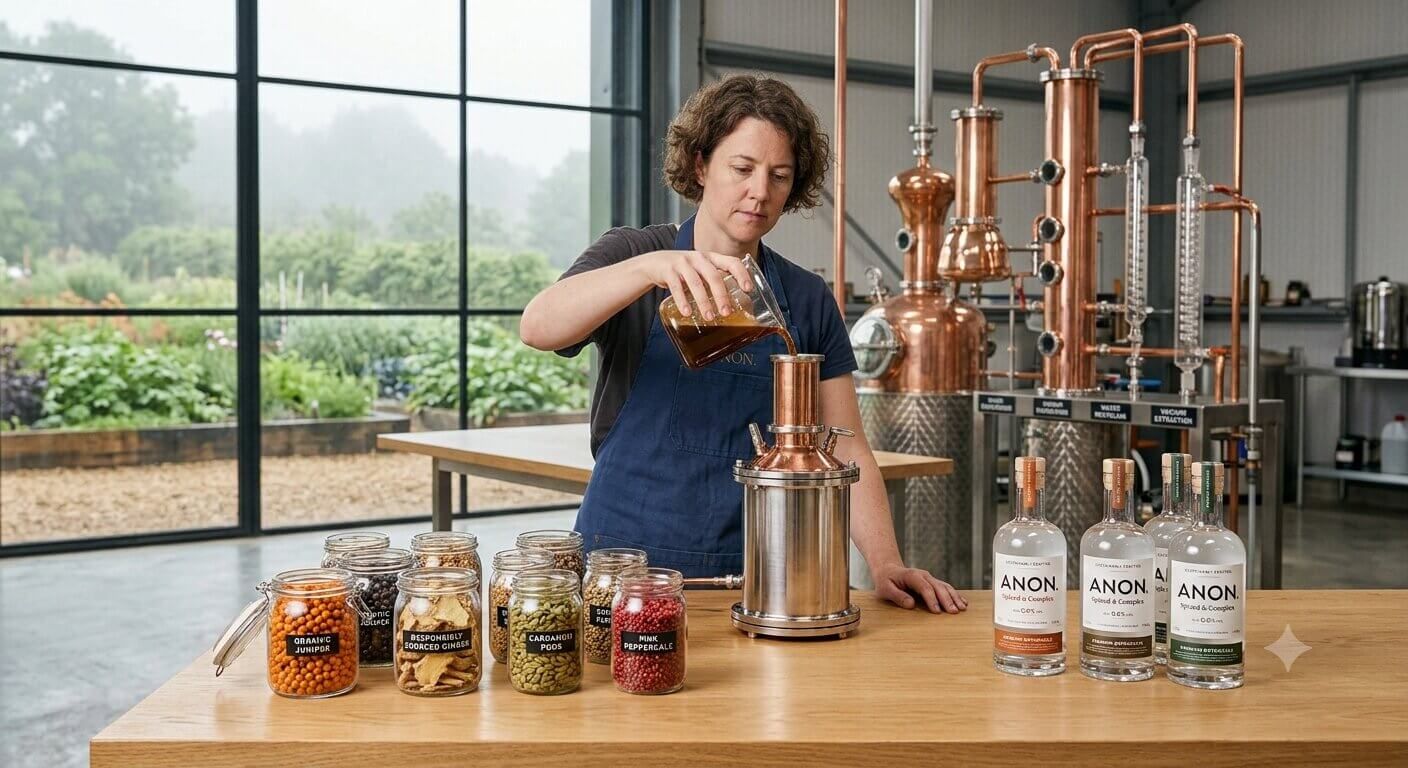
It is also worth having the ingredients to hand. Botanical spirits contain extracts such as wormwood, gentian and quassia, and a guest with a specific reason for avoiding alcohol may reasonably want to check. Each ANON product page lists ingredients and nutritional information, and the ANON FAQs page covers the labelling question in more detail.
Do I need special glassware?
No, but use the glassware you already have rather than reaching for tumblers.
A large wine glass or copa is ideal for an aperitif serve because the bowl holds the aroma, which matters more in an alcohol-free drink than an alcoholic one. A highball works for anything long. Most households already own both.
The one thing worth buying is ice. Alcohol-free drinks are usually served long and diluted, and a drink built on three cubes will be warm and flat within ten minutes. Fill the glass properly.
Which ANON drink should I choose for hosting?
If you are buying one bottle to cover most situations, choose Bittersweet Aperitif. It works as an arrival drink, before a meal, and suits the widest range of palates.
If you host regularly, a second bottle in a different register is worth having. English Garden suits lighter, warmer-weather occasions, and Spiced Cane suits anyone who prefers dark spirits.
Browse the full range in the alcohol-free spirits shop, and enjoy free UK delivery on orders of two or more bottles.
Frequently asked questions
What is the easiest alcohol-free drink to make for guests?
An aperitif and tonic. Ice, 50ml of spirit, 150ml of tonic, a slice of orange. It takes fifteen seconds, needs no cocktail skill and looks the part.
Should I tell guests a drink is alcohol-free?
Yes, mention it when you hand it over, briefly and without ceremony. People who are avoiding alcohol need to know, and people who are not will usually be curious rather than disappointed.
Can I batch alcohol-free drinks in advance?
Yes, you can batch alcohol-free spirits and any still mixers, then chill them in a jug. Add sparkling mixers and ice at the point of serving; otherwise, the drink is flat by the time it reaches anyone.
Are alcohol-free spirits expensive compared with soft drinks?
Per bottle, yes. Per serve, the gap is narrower, because a 70cl bottle gives roughly fourteen drinks. Compared with a bottle of wine that gives six glasses, the maths is less uneven than it first appears.
What do I do if a guest says they do not like mocktails?
Take them at their word and skip the sweet, fruit-led serves entirely. A bitter aperitif with tonic is a different kind of drink and usually lands better with people who dislike mocktails.