Alcohol-Free vs Non-Alcoholic: What’s the Difference?
If you've started exploring alcohol-free and non-alcoholic drinks, you may have noticed that the terms aren't always used consistently. So, what is the difference between alcohol-free and non-alcoholic?
In the UK,
“alcohol-free” has a specific meaning in government guidance, while “non-alcoholic” is often used more broadly by consumers and drinks brands. The important thing is to check the ABV on the product rather than assuming that every drink described as non-alcoholic contains exactly zero alcohol.
What Does Alcohol-Free Mean?
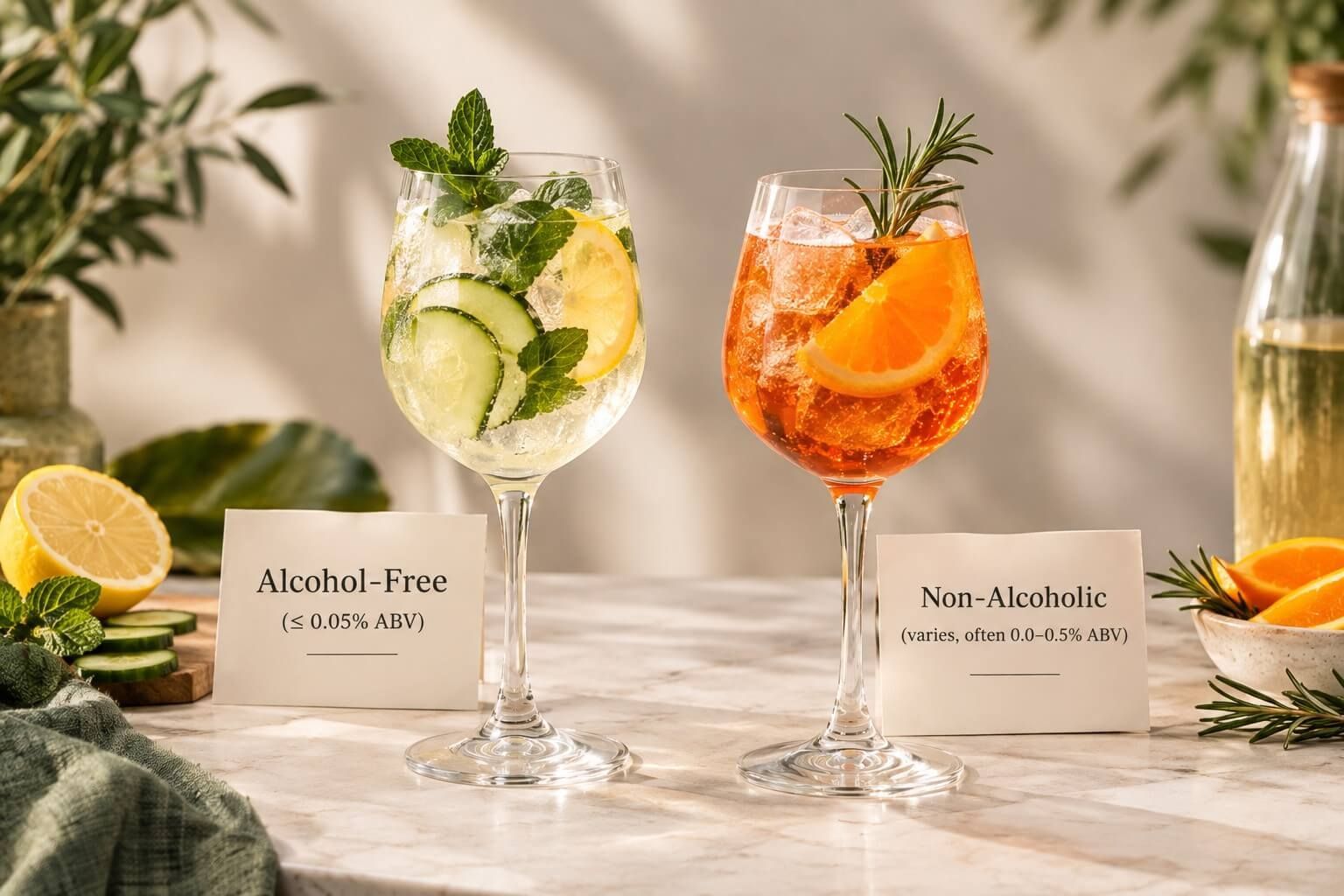
In UK guidance, alcohol-free is generally used for drinks containing no more than 0.05% ABV. This means that a drink labelled alcohol-free does not necessarily contain absolutely zero traces of alcohol.
That distinction can be surprising.
For example, a drink containing 0.05% ABV contains a very small amount of alcohol, even though it falls within the current guidance for the alcohol-free descriptor.
Drinkaware explains that some products described as alcohol-free can contain a small amount of alcohol, and recommends checking the ABV if you need or want to avoid alcohol completely.
So, when you see
alcohol-free, don't automatically assume it means absolute zero.
What Does Non-Alcoholic Mean?
Non-alcoholic is a term consumers commonly use to describe drinks that are intended to provide an alternative to alcoholic drinks.
However, UK guidance around the term is more complicated than simply saying “non-alcoholic means 0%”.
Government guidance states that the descriptor “non-alcoholic” should not generally be used alongside a name commonly associated with an alcoholic drink, subject to specific exceptions. At the same time, the term is widely used in everyday conversation and across the modern drinks market to describe alcohol alternatives.
This is one reason drink labelling can feel confusing.
Rather than relying on the words alone, look at the ABV and product information.
Alcohol-Free vs Non-Alcoholic: Are They the Same?
Not necessarily.
The terms are often used interchangeably in everyday conversation, but they shouldn't automatically be treated as having exactly the same meaning.
The easiest way to understand the distinction is to focus on alcohol content and the wording used on the product.
| Term | What it generally tells you |
|---|---|
| Alcohol-free | UK guidance recommends this descriptor for drinks containing no more than 0.05% ABV |
| De-alcoholised | Used for products from which alcohol has been extracted and containing no more than 0.5% ABV under current guidance |
| Low alcohol | Drinks containing no more than 1.2% ABV under UK guidance |
| 0.0% | Indicates a product presented as containing zero alcohol, but always check the individual product information |
| Non-alcoholic | A broad consumer term, but its use alongside names associated with alcoholic drinks is subject to UK guidance |
The important takeaway is simple: don't judge the alcohol content from the marketing description alone. Check the product's ABV.
Does Alcohol-Free Mean There Is No Alcohol?
Not always.
This is one of the biggest misconceptions surrounding alcohol-free drinks.
Under current UK government guidance, the alcohol-free descriptor can apply to drinks containing up to 0.05% ABV.
That is an extremely small amount, but it is technically not the same as absolute zero.
There is also some variation in how the term is used in the marketplace. Drinkaware notes that because the government guidance is voluntary, some products labelled alcohol-free can contain up to 0.5% ABV.
This is why checking the label matters.
If avoiding alcohol completely is important to you, look for a product that clearly states its alcohol content and check the manufacturer's information.
What Does 0.0% Alcohol Mean?
You will often see 0.0% used on alcohol-free and non-alcoholic drinks.
It is designed to communicate that the product contains no measurable alcohol at the stated level, but you should still check the individual product's information if you have a specific reason for avoiding even trace amounts.
The wider point is that 0.0%, alcohol-free, non-alcoholic and low alcohol are not simply interchangeable labels.
Understanding ABV gives you a much clearer picture of what you are actually buying.
What Is ABV?
ABV stands for alcohol by volume.
It tells you how much alcohol is present as a percentage of the drink's volume.
For example:
- 0.0% ABV indicates no alcohol at the stated level.
- 0.05% ABV represents a very small amount.
- 0.5% ABV contains more alcohol than a 0.05% drink but is still considerably lower than a standard alcoholic drink.
- 1.2% ABV falls within the UK guidance for low-alcohol drinks.
For comparison, the average strength of a standard beer is around 4.4% ABV, according to Drinkaware.
Understanding ABV is therefore one of the easiest ways to compare products rather than relying solely on terms such as “alcohol-free” or “non-alcoholic”.
Why Is There So Much Confusion Around These Terms?
The drinks category has developed quickly.
There are now alcohol-free beers, wines, spirits alternatives, aperitifs, cocktails, botanical drinks and ready-to-drink serves, with different production methods and different alcohol levels.
At the same time, consumers use terms such as alcohol-free, non-alcoholic, zero alcohol and 0.0% in everyday conversation, sometimes meaning the same thing.
Drinkaware's 2025 research highlights just how significant the confusion remains: only 26% of drinkers could correctly define “alcohol free”, while just 16% knew what counts as low alcohol.
That means clearer information is valuable for consumers.
Why Are Alcohol-Free and Non-Alcoholic Drinks Becoming More Popular?
This isn't simply a trend around Dry January anymore.
Drinkaware's latest UK research found that 44% of UK drinkers used alcohol-free or low-alcohol drinks to moderate their alcohol intake in 2025, compared with 31% in 2018. Alcohol-free use alone increased from 18% to 31% over the same period.
People choose these drinks for different reasons.
You might want something to enjoy at dinner without alcohol. You might be driving, taking a break from drinking, reducing your overall intake or simply prefer the flavour of a particular alcohol-free drink.
For many people, it is also about keeping the ritual and social experience of having a drink without choosing a standard-strength alcoholic option.
Are Non-Alcoholic Drinks Completely Alcohol-Free?
You should never assume that every product described as non-alcoholic contains absolutely zero alcohol.
Different products can have different ABV levels, and terminology can vary.
If the amount of alcohol matters to you, check:
- The ABV
- The product label
- The manufacturer's product information
- Any relevant serving guidance
This is particularly important if you need or want to avoid alcohol completely.
Drinkaware specifically advises that some products described as alcohol-free can contain small amounts of alcohol.
Is Alcohol-Free the Same as Low Alcohol?
No.
These terms describe different alcohol levels.
Under current UK guidance:
Alcohol-free is recommended for drinks containing no more than 0.05% ABV.
De-alcoholised can refer to drinks containing no more than 0.5% ABV.
Low alcohol refers to drinks containing no more than 1.2% ABV.
So a low-alcohol drink isn't the same thing as an alcohol-free drink.
If your aim is to reduce your alcohol intake, these distinctions are worth understanding.
Does Alcohol-Free Mean It Tastes Like Alcohol?
Not necessarily.
This is where the modern alcohol-free drinks category has become much more interesting.
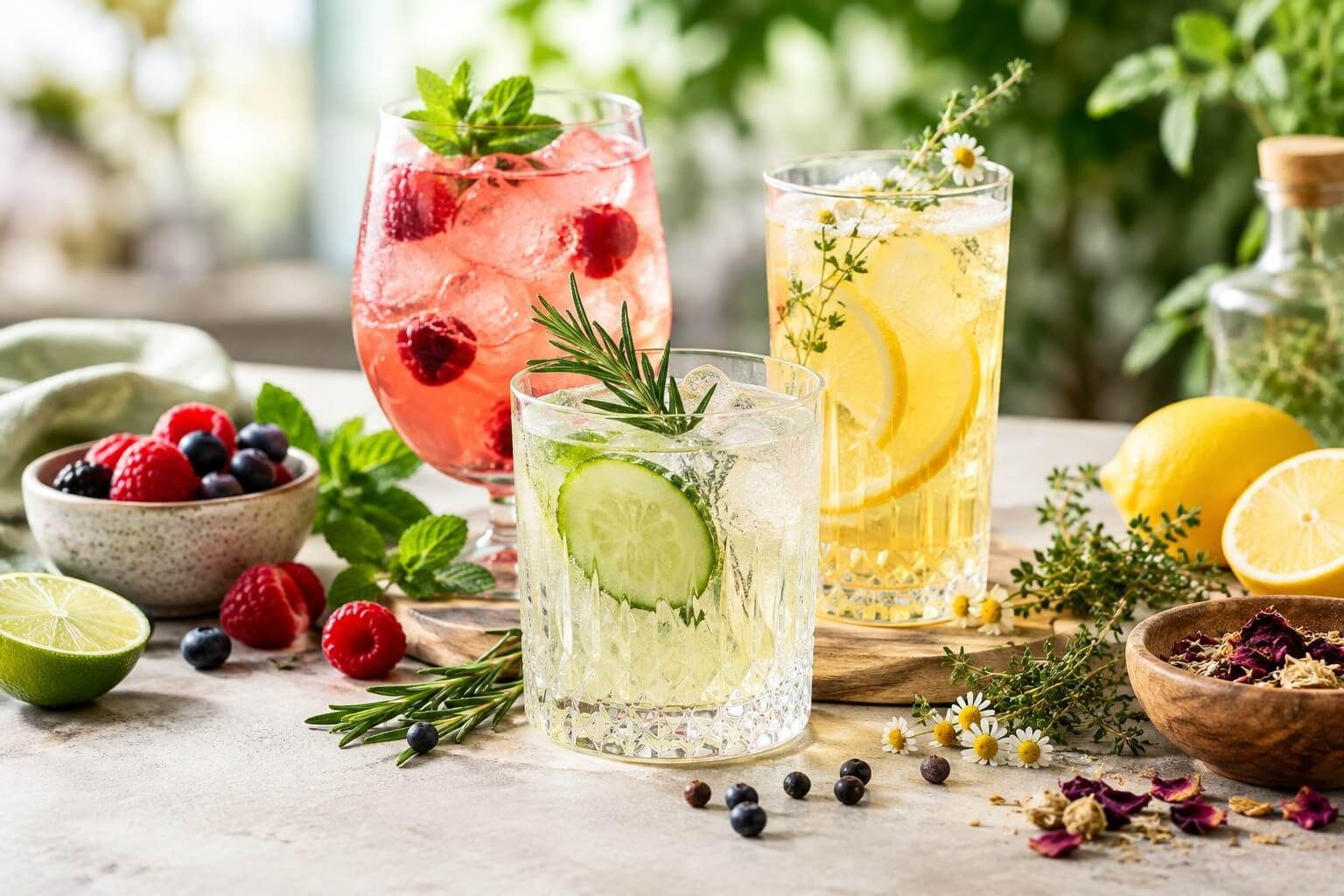
Some products are designed to imitate familiar alcoholic drinks, while others focus on creating their own flavour profiles using botanicals, spices, citrus, herbs and fruit.
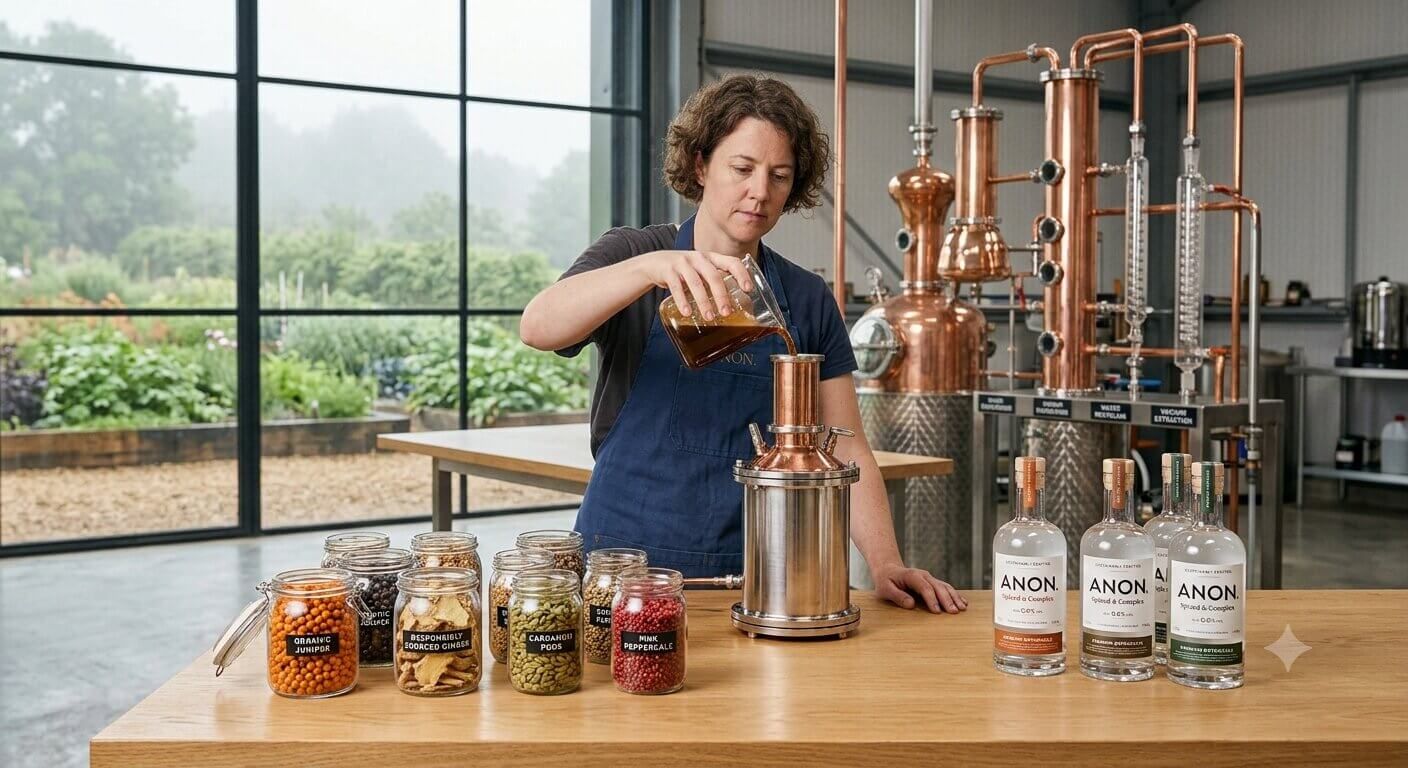
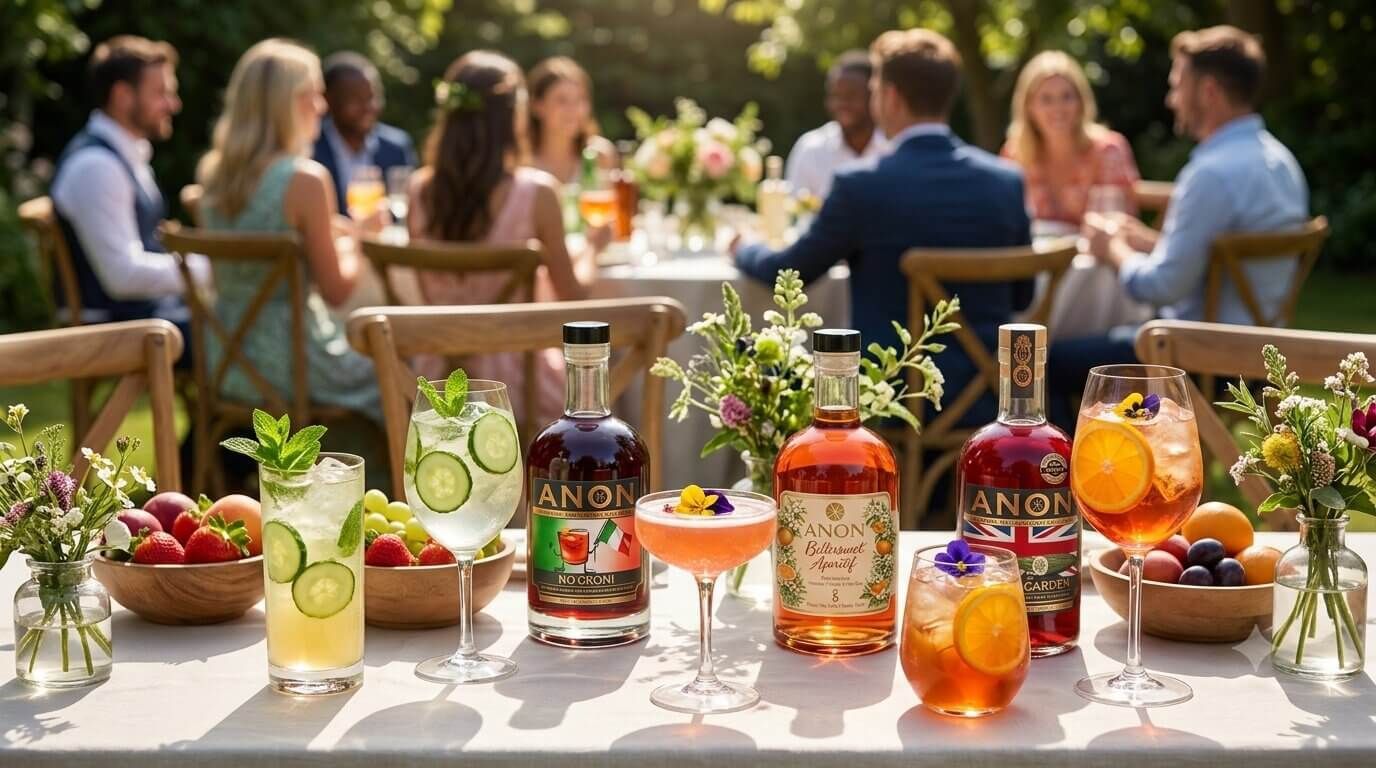
For example, ANON's range includes drinks designed around bitterness, botanicals, spice, fruit and refreshing serves, rather than simply attempting to copy traditional alcoholic drinks.
The Bittersweet Aperitif combines botanicals with flavours including orange, citrus and herbs and is designed for spritzes, mixing and non-alcoholic cocktails. Spiced Cane brings warming notes of cinnamon, lemon, vanilla and ginger, while English Garden combines summer fruits, cucumber, mint, orange, apple and strawberry.
That means choosing alcohol-free doesn't have to mean choosing something that tastes like a watered-down version of an alcoholic drink.
What Should I Look For When Buying an Alcohol-Free Drink?
Start with the occasion and flavour profile rather than the label alone.
If you want something bitter
Look for aperitifs featuring bitter botanicals, citrus and herbal flavours.
If you want something refreshing
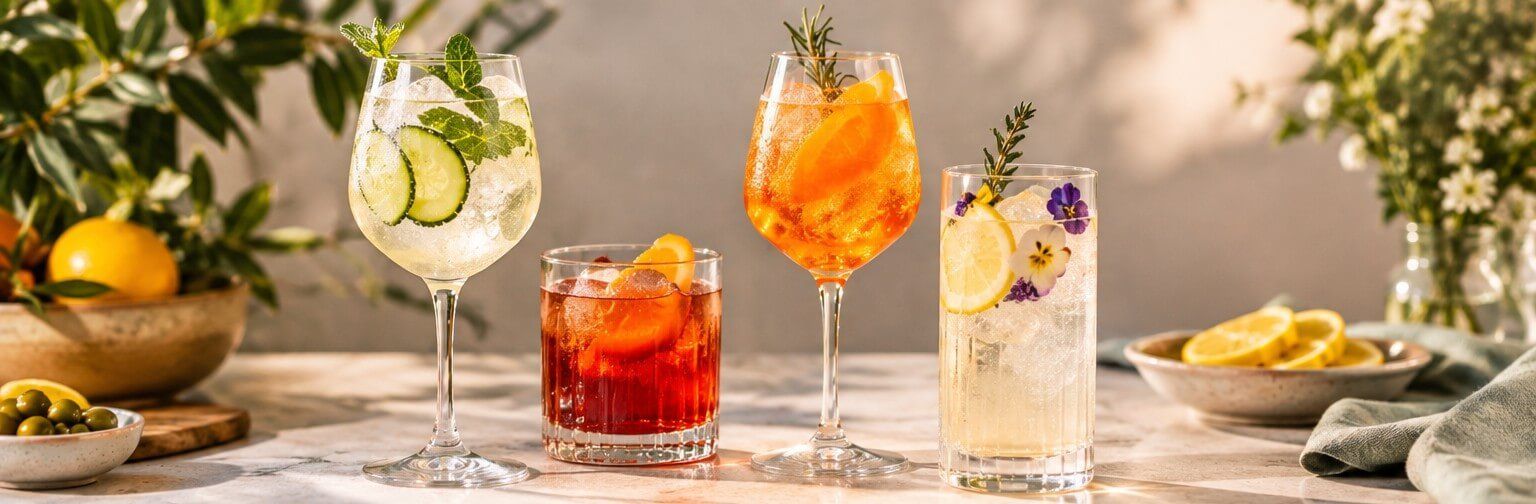
A sparkling serve with citrus, cucumber, mint or fruit can work particularly well.
If you want something warming
Spiced drinks can offer depth without relying on alcohol.
If you want something ready to drink
A ready-to-drink serve can make alcohol-free entertaining much easier.
If you need to avoid alcohol completely
Check the stated ABV and the manufacturer's information carefully rather than assuming that “alcohol-free” automatically means 0.0%.
What Does This Mean for ANON Drinks?
At ANON, the focus is on improving your drinking experience, without the alcohol.
The range includes alcohol-free and non-alcoholic drinks designed to be enjoyed as mixers, mocktails or standalone serves. The emphasis is on flavour and the drinking experience rather than simply removing alcohol from a familiar drink.
That distinction matters.
Choosing an alcohol-free drink doesn't have to mean choosing something that feels like a compromise. You can still have something complex, interesting and appropriate for the occasion.
Whether you are looking for a bitter aperitif before dinner, a refreshing summer serve or something warming and spiced, the growing alcohol-free category offers plenty of options to explore.
So, What Is the Difference Between Alcohol-Free and Non-Alcoholic?
The short answer is that the terms are often used interchangeably by consumers, but they shouldn't automatically be treated as identical.
In UK guidance, alcohol-free has a specific threshold of no more than 0.05% ABV. Non-alcoholic is a broader and more complicated term whose use is subject to UK labelling guidance.
If you want to know exactly what is in your drink, the most reliable approach is to check the ABV and product information.
And if you're choosing alcohol-free drinks because you want to drink less, remember that the category is no longer limited to imitations of beer, wine or spirits.
There is now a much wider world of sophisticated drinks built around botanicals, citrus, herbs, spice, bitterness and fruit.
Alcohol-free doesn't have to mean less interesting. It can simply mean a different way to drink.
Frequently Asked Questions
Is alcohol-free the same as non-alcoholic?
Not necessarily. The terms are often used interchangeably in everyday conversation, but UK guidance gives specific meaning to some alcohol-related descriptors. Alcohol-free is generally used for drinks containing no more than 0.05% ABV under current government guidance.
Does alcohol-free mean 0.0%?
Not necessarily. Under current UK guidance, alcohol-free can refer to drinks containing up to 0.05% ABV. If you need to avoid even trace amounts of alcohol, check the product's stated ABV and manufacturer information.
Can alcohol-free drinks contain alcohol?
Some can contain very small amounts. Current UK guidance recommends the alcohol-free descriptor for drinks containing no more than 0.05% ABV, although Drinkaware notes that some products labelled alcohol-free can contain up to 0.5% ABV.
What is 0.0% alcohol?
0.0% indicates that no alcohol is stated at that level, but individual product information should always be checked if avoiding alcohol completely is important to you.
Is 0.5% alcohol-free?
A drink containing 0.5% ABV is considerably lower in alcohol than a standard alcoholic drink, but it is not the same as 0.0% ABV. The UK guidance for the alcohol-free descriptor is no more than 0.05% ABV, while de-alcoholised products can contain up to 0.5% ABV.
Is low alcohol the same as alcohol-free?
No. UK guidance defines low alcohol as no more than 1.2% ABV, while alcohol-free is recommended for drinks containing no more than 0.05% ABV.
Why are alcohol-free drinks becoming more popular?
Alcohol-free and low-alcohol drinks are increasingly being used as alternatives to regular-strength alcohol. Drinkaware reported that 44% of UK drinkers used these products to moderate their alcohol intake in 2025.
Do alcohol-free drinks taste like alcoholic drinks?
Some are designed to replicate familiar alcoholic drinks, while others have their own flavour profiles. Modern alcohol-free drinks can use botanicals, herbs, spices, citrus and fruit to create complexity without trying to copy a particular alcoholic drink.